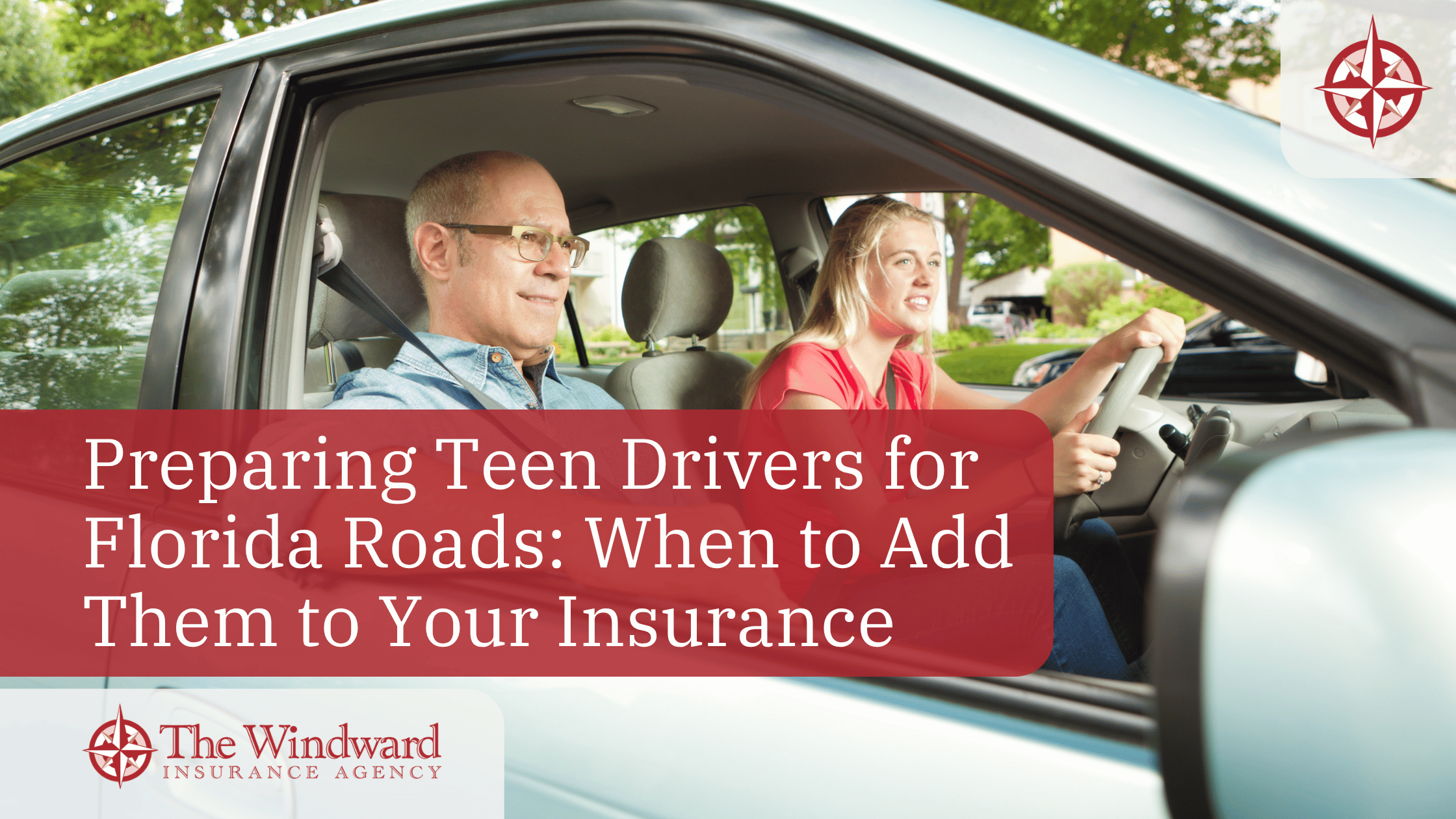
When should you add a teen driver to your auto insurance?
In most cases, you should contact your insurance company as soon as your teen becomes a licensed driver and will regularly use a vehicle in your household. Waiting too long can create coverage issues, claim complications, or unexpected costs.
Watching your teenager earn a driver's license is exciting. It's also one of the biggest changes your family's auto insurance policy will experience. Many parents assume their teen is automatically covered, while others aren't sure whether they need to call their insurance company immediately.
Understanding when to add a teen driver to your auto insurance can help you avoid coverage surprises and make informed decisions about protecting your family on Florida roads.
Why Teen Drivers Create a Different Insurance Situation
Most auto insurance policies are built around the people who regularly drive vehicles in your household. Once a teenager begins driving regularly, insurance companies typically expect that driver to be disclosed and appropriately accounted for on the policy.
This differs from situations involving occasional borrowers or friends who use your vehicle once in a while. A newly licensed teen often becomes a regular driver with ongoing access to household vehicles. Because of this, insurance companies view teen drivers differently than occasional drivers.
When Should You Add a Teen Driver to Your Auto Insurance?
The answer depends on your specific insurance company and policy, but a good rule of thumb is simple: Contact your insurance agent as soon as your teen receives a driver's license.
Many insurers require notification once a licensed household member begins driving regularly. Waiting may create complications if an accident occurs before your policy information is updated.
Situations often requiring a policy review include:
- Your teen receives a learner's permit
- Your teen obtains a driver's license
- Your teen regularly drives a family vehicle
- Your teen purchases or receives a vehicle
- Your teen begins driving to school, work, or other activities
A quick review with your insurance agent can help determine how your insurance company handles each situation.
What Happens If You Don’t Add a Teen Driver?
Parents sometimes delay adding a teen driver because they're concerned about premium increases. While understandable, delaying the conversation can create bigger problems. Potential issues may include:
- Coverage disputes after an accident
- Claim investigations involving household drivers
- Questions about who regularly operates the vehicle
- Delays during the claims process
The most important thing is making sure your policy accurately reflects who drives your vehicles. Knowing when to add a teen driver to your auto insurance isn't just about compliance. It's about making sure coverage works as expected when you need to use it.
Does a Learner’s Permit Require an Insurance Change?
Many parents ask this question before their teen becomes fully licensed.
Insurance companies handle learner's permits differently. Some insurers may not require a permit holder to be formally added immediately, while others may want the driver listed or documented.
Because requirements vary, the safest approach is to notify your insurance agent when your teen receives a learner's permit. Doing so early can:
- Prevent misunderstandings later
- Clarify future requirements
- Make the transition to licensed driver status easier
Even if no immediate policy changes are required, your agent can explain what happens next.
Why Auto Insurance Costs Often Increase With Teen Drivers
One reason parents delay adding a teen driver is concern about premium increases. Teen drivers generally have limited driving experience, which creates more uncertainty from an insurance perspective. As a result, premiums often increase when a newly licensed driver is added to a policy.
Several factors influence the cost impact, including:
- Age of the teen driver
- Driving history (which begins when a learner’s permit is issued)
- Type of vehicle
- Household location
- Available discounts
- Academic achievement programs
While premiums often rise, failing to properly address a new teen driver can create larger financial risks than the increase itself.
Should Your Teen Have Their Own Policy?
In many cases, adding a teen to a family policy is the most practical and affordable option.
However, certain situations may warrant a separate policy, such as:
- A vehicle titled solely to the teen
- Unique ownership arrangements
- Special insurance company requirements
Because every situation is different, it's worth discussing your options with an insurance professional before making assumptions. The goal isn't simply finding the least expensive solution. It's finding coverage to fit your family's needs.
How Parents Can Help Reduce Teen Driver Risk
Insurance is only one part of preparing a teen for the road. Parents can help reduce risk by establishing clear expectations and encouraging safe driving habits from day one. Consider discussing:
- Distracted driving dangers
- Cell phone restrictions
- Passenger limits
- Night driving expectations
- Weather-related driving challenges
- Vehicle maintenance basics
Florida roads present unique challenges, including heavy traffic, sudden storms, tourist congestion, and year-round driving conditions. Building strong habits early can make a significant difference.
Questions to Ask Your Insurance Agent
Before adding a teen driver, consider asking your agent:
- When should I add my teen driver to my auto insurance?
- Does my company require permit holders to be listed?
- What discounts are available for teen drivers?
- How will premiums change?
- Is my teen covered while learning to drive?
- Are there coverage options designed for young drivers?
These conversations can help you understand both costs and responsibilities before your teen spends significant time behind the wheel.
Frequently Asked Questions: When to Add Teen Drivers to Your Auto Policy
When should you add a teen driver to your auto insurance?
You should generally contact your insurance company when your teen receives a driver's license or begins regularly driving a household vehicle. Requirements vary by insurer, so checking early is important.
Does a learner’s permit affect auto insurance?
A learner's permit may affect auto insurance, depending on the insurance company. Some insurers require notification, while others handle permit holders differently until licensing occurs.
Will my auto insurance premium increase when I add my teen?
In many cases, adding a teen driver increases premiums because inexperienced drivers are statistically involved in more accidents. The exact increase depends on several factors.
Can my teen drive without being added to my policy?
Insurance companies have different rules regarding household drivers. A teen who regularly drives household vehicles may need to be disclosed to ensure proper coverage.
Should my teen have a separate auto insurance policy?
Many teens remain on a parent's policy, but certain ownership or vehicle situations may warrant a separate policy. An insurance agent can help determine the best approach.
Adding a Teen Driver Starts With Understanding Your Options
If you've been wondering when to add a teen driver to your auto insurance, the best answer is often sooner rather than later. A quick conversation with your insurance company can clarify requirements, help prevent coverage issues, and ensure your family is properly protected as your teen begins driving.
Preparing teen drivers for Florida roads involves more than earning a license. It also means making sure your insurance keeps pace with this important milestone.
If you have questions about adding a teen driver to your policy, contact the helpful insurance professionals at The Windward Insurance Agency. We can review your current auto insurance coverage, explain your options, and help you make informed decisions before your teen gets on the road. You can also get an online quote or call (866) 231-2433 for personalized assistance.